


How to write a press release is a question many businesses ask when they want to share important news and generate media coverage. A press release is a powerful tool for communicating company information. In today’s market, it is critical for businesses to regularly share announcements to generate media coverage and raise awareness about events, product launches and other company updates. In this blog, we’ll explore the key components of a press release, how to write an effective one and best practices for distribution and measurement.
What is a Press Release?
A press release is a written communication that announces newsworthy information to the media. It is typically sent to journalists, editors and other media representatives to encourage them to write about or broadcast the information in the release.
Press Release Templates
We offer a variety of press release templates to help you craft your news announcements. These templates provide a structured format for your press release and can be customized to suit your needs. View our press release templates here.
Types of Press Releases
When it comes to communicating news and updates about your business, different types of press releases can be tailored to suit various types of announcements. Whether you’re announcing a new product, sharing details about an upcoming event or highlighting a significant company milestone, understanding the different types of press releases available can help you craft a message that resonates with your audience and maximizes media coverage.
Standard Press Release
Announces general company news or updates.
Event Announcement
Provides details about upcoming events.
Mergers + Acquisitions
Announces a merger or acquisition involving the company.
Executive Appointments
Announces new appointments or changes in leadership within your company.
Product Launch
Introduces a new product or service.
Rebranding
Announces a company rebranding or name change.
Partnership Announcements
Announces new partnerships or collaborations with other companies or organizations.
Industry Reports
Shares insights from industry reports or studies conducted by your company.
Award Announcements
Announces awards or recognitions received by your company or employees.
Community Initiatives
Highlight community service projects or initiatives your company is involved in.
Financial Results
Shares financial updates, such as quarterly earnings reports or financial performance highlights.
The Benefits of Press Releases
Distributing press releases can be an effective strategy for building brand awareness by getting your news in front of journalists and potential customers. Press releases can also generate media coverage, which can lead to increased visibility and credibility for your brand.
Press releases may also help drive traffic to your website if media outlets or other websites link back to your site when covering your news. This can positively impact your SEO efforts and improve your search engine rankings. They can also be a good tool for establishing your company as a thought leader in your industry.
Press Release Format
Formatting your press release is crucial to ensuring your message is clear, concise and impactful. A well-structured press release can capture the attention of journalists and media outlets, increasing the likelihood that your news will be covered and shared with a wider audience. By following a standard format that includes a compelling headline, dateline, body content and contact information, you can effectively convey your message and engage your target audience.
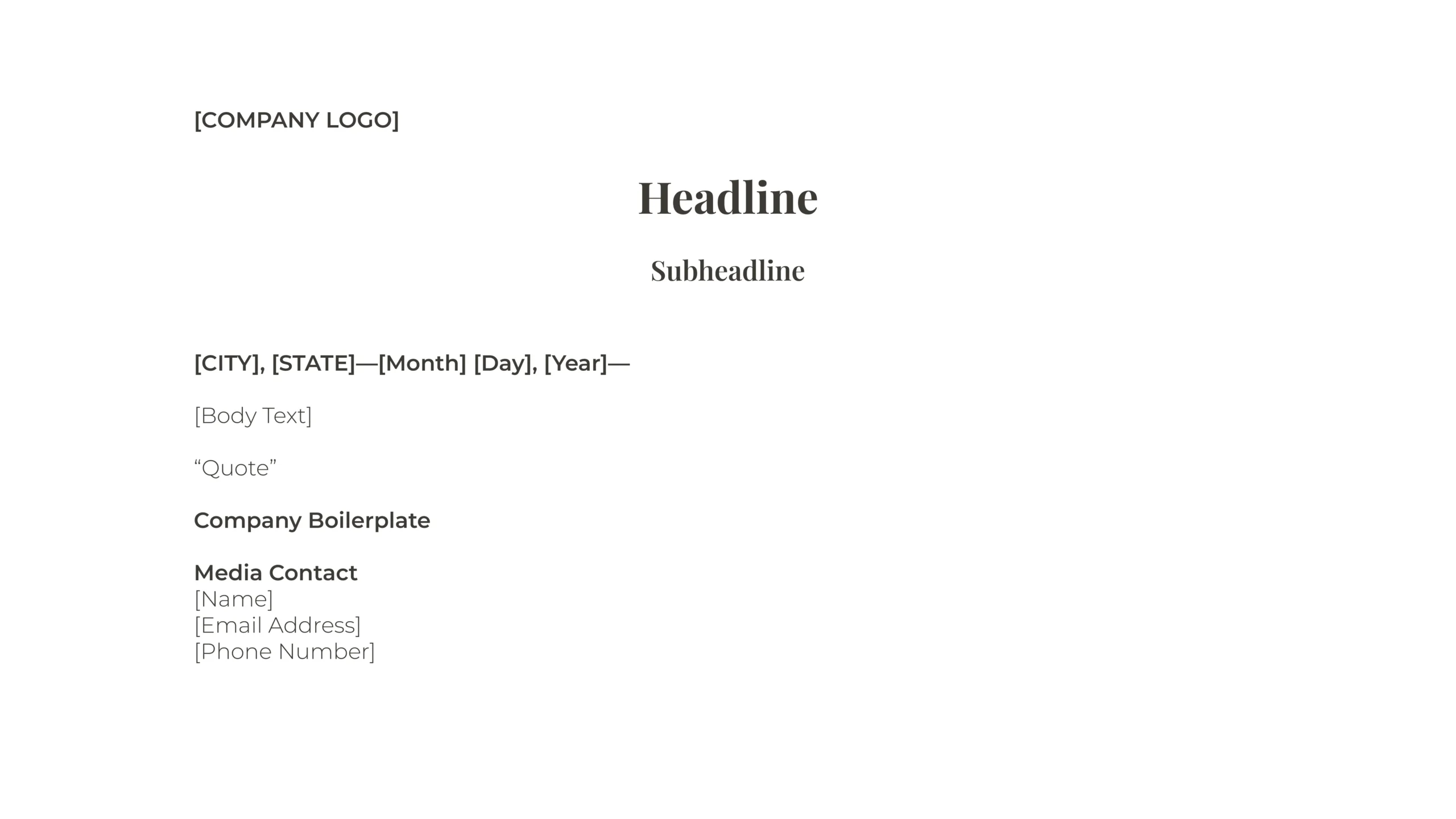
- Logo: Include the company logo.
- Headline: Clearly summarizes the most important news.
- Subheadline: Provides additional context or a lead-in to the main body (if necessary).
- Dateline: Includes the date and location the news was reported.
- Body: Contains more details and supporting information about the news.
- Quote: Provides a statement from a company representative about the news.
- Company Info (Boilerplate): Offers a brief overview of the company.
- Media Contact Information: Provides contact details for media inquiries.
How to Write a Press Release
Writing a press release requires careful attention to detail and a clear understanding of your audience and message. Following these steps will help you craft a well-written release.
Choose a Target Audience
Before drafting a press release, it is important to identify the specific journalists, bloggers and media outlets that are most likely to be interested in your news. Your press release should be tailored to appeal to their specific interests and preferences.
Logo Placement
Position the company logo in the header of the press release to reinforce brand identity and enhance visual appeal.
Craft a Compelling Headline
Draft a headline that grabs attention and clearly summarizes the main news or announcement. Keep it short, engaging and relevant to your target audience.
Add Context with a Subheadline
Provide additional context or a lead-in to the main body of the press release if necessary. This can help readers better understand the significance of the news and why it matters.
Dateline
Include the date and location of the press release to indicate when and where the news is coming from. This provides context for journalists and helps them assess the news’s timeliness.
Convey News Value
Clearly explain why your news is important and why it should matter to the audience. Focus on the key benefits or implications of the news and avoid overly promotional language.
Provide the Details of Your Announcement
In the body of the press release, provide detailed information about your news, including the who, what, when, where, why and how. Use clear, concise language and avoid jargon or technical terms that may be unfamiliar to your audience.
Provide a Quote
Include a quote from a company representative that adds depth and credibility to your press release. The quote should be relevant to the news and provide a human element to the story.
Provide Background Information
Offer additional context or background information to help readers understand the full context of the news.
Summarize the “Who” and the “What” in a Boilerplate
Include a brief boilerplate at the end of the press release that summarizes key information about your company. This should include your company’s mission, products or services and any relevant achievements.
Include Contact Information
Provide contact information for a media representative who can provide additional information or arrange interviews. This should include a name, email address and/or phone number.
Following these steps can help you craft a press release that effectively communicates your news and engages your target audience.
Common Mistakes When Writing a Press Release
It is common for organizations to make mistakes when drafting press releases, which can undermine their efforts. Here are some pitfalls to avoid when crafting your next press release to ensure it resonates with your audience and achieves the desired impact.
Lack of Newsworthiness
One of the most critical errors in press release writing is failing to ensure the content is newsworthy. Journalists constantly receive a large amount of information, so your press release must include news that is relevant, timely and significant. Before drafting your release, ask yourself if the news genuinely offers value or insight. Without a compelling news angle, your press release may be ignored.
Off Topic
Staying focused on the main news is essential. A press release should be concise and to the point, avoiding any off-topic information that can distract or confuse the reader. Clearly define the primary message you want to convey and stick to it. Keep your writing streamlined and ensure every sentence aligns with the core purpose of the release.
Inauthenticity
Authenticity is key to building trust and credibility. Press releases that come across as insincere or overly promotional can be off-putting to journalists and readers. Be honest and transparent in your communication, providing factual information. Avoid exaggerated claims or corporate jargon that can make your release seem disingenuous. Instead, focus on delivering clear, truthful and compelling narratives that reflect your organization’s values and integrity.
Press Release Examples
While understanding structure and best practices is essential, reviewing strong real-world examples can help you see how these elements come together in practice. Studying high-quality press release examples across different categories makes it easier to identify what works—from headline construction to quote placement to how the most important information is prioritized.
Below are a few examples of well-crafted press releases from well-known organizations:
- Nasdaq to Enhance Global Market Surveillance Offering with Generative AI
- Johnson & Johnson to Acquire Shockwave Medical
- Gartner Predicts Half of Procurement Contract Management Will Be AI-Enabled by 2027
Each of these releases demonstrates core principles of effective press release writing: a clear and direct headline, strong opening paragraphs that prioritize news value, relevant executive quotes and concise supporting details. They focus on why the announcement matters, not just what happened.
Looking at examples across event announcements, executive appointments, product launches, crisis communications and mergers helps clarify how tone, structure and emphasis shift depending on the type of news being shared. Seeing those differences side by side can make it significantly easier to apply the right framework to your own announcement.
Methods for Press Release Distribution
Distributing a press release effectively is just as important as writing it. To maximize your reach and ensure your news gets noticed, you must use the right channels. Here are several methods for distributing press releases:
Distribution Through a Press Release Distribution Service
Using a press release distribution service, such as Business Wire or GlobeNewswire, can vastly extend the reach of your announcement by tapping into a broad network of media outlets and journalists. While this method can be more costly, it can also provide detailed analytics on your press release’s performance, helping you measure its impact and refine future strategies.
Posting on the Company Website
Publishing your press release on your company’s website is an essential step in the distribution process. This method not only provides a permanent, easily accessible record of your announcement but also boosts your SEO by driving traffic to your site. Featuring your press release in a dedicated news or media section makes it easy for visitors to find.
Email Distribution to Media Contacts
Emailing your press release directly to media contacts is a traditional method. When using this method, it’s crucial to maintain an up-to-date and well-organized media list. Craft a compelling subject line and personalize your email pitch to increase the likelihood of a journalist opening and reading it. Building and nurturing relationships with key media contacts can significantly enhance the effectiveness of your email distribution.
Measuring the Impact of Your Press Release
Measuring the impact of your press release is important for understanding its effectiveness and refining your strategy for future releases. Key metrics to monitor include the number of media pickups and online mentions. Most press release distribution services or media monitoring services allow you to track these metrics through a dedicated dashboard. Utilizing these tools can help provide valuable insights into how well your news resonated with your target audience and help you identify areas for improvement.
Press Releases with UPRAISE PR
Looking to boost your brand’s visibility and improve your media relations game? UPRAISE is here to help you navigate the dynamic media landscape and help you achieve your communication goals. Contact our team today to get started!
