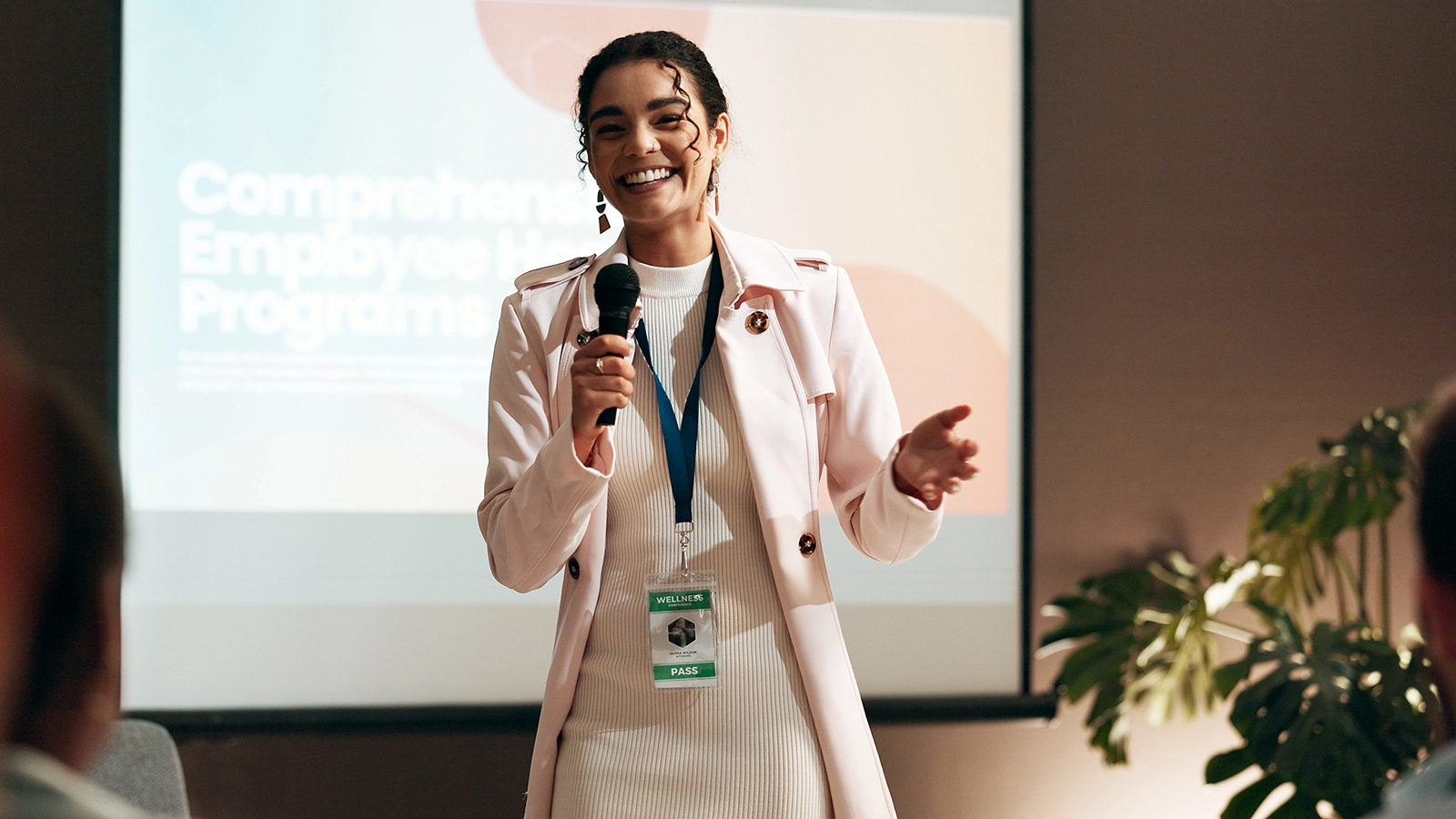
Every year, marketing and PR teams wait for conference speaking opportunities to open and then rush to develop a topic, identify a speaker and write the abstract before the deadline.
Speaking at an industry conference is one of the most valuable opportunities in an executive thought leadership program. In a single session, a leader can demonstrate expertise to customers, prospects, partners, analysts, journalists and others who influence the business.
But conference organizers are not looking for executives who simply want visibility or companies with products to promote. They need speakers who understand their audiences, bring credible firsthand experience and can turn timely industry issues into practical lessons attendees can use.
Earning those opportunities requires far more than responding to open calls for proposals. The strongest speaking programs begin nine to 12 months in advance, with clear business goals, the right mix of executives and topics, strong relationships with conference organizers and proposals grounded in genuine expertise. AI can help teams research, organize and refine those proposals, but it cannot provide the insight that makes a speaker worth putting on stage.
Start With the Business Goal, Not the Event Calendar
Before building a list of conferences, determine what the speaking program needs to accomplish. Is the goal to establish an executive as an authority on an emerging issue? Support entry into a new market? Create conversations with a specific group of buyers? Strengthen relationships with analysts or partners? The answer should shape every decision that follows.
A prestigious conference is not automatically the right conference. Speaking can require membership or sponsorship fees, several days of travel and many hours of preparation. If the audience does not include the people who influence the business, the opportunity may deliver little more than a logo for the company website.
We have also seen executives accept sessions that were a poor fit for their level or expertise. A CEO speaking on a highly tactical panel, for example, may do less for the executive’s profile than a smaller event built around senior-level discussion. Audience quality, topic fit and format matter more than attendance alone.
When to Start Planning Conference Speaking Opportunities
Many calls for proposals close four to six months before the conference. By the time the form appears, the strategy should already be in place.
Start with a tiered event calendar that captures the audience, conference theme, proposal deadline, cost, session formats, past speakers and whether the conference favors customers, practitioners, vendors or academics.
Then build a simple matrix that connects:
- The executives the company wants to elevate
- The issues on which each executive has genuine authority
- The proof each speaker can offer, including data, customer results and lessons learned
- The audiences and conferences that will value those insights
This work prevents the common last-minute scramble in which the PR team finds an open call, chooses a broad topic and tries to manufacture an abstract before the deadline. It also creates enough time to recruit a customer or partner as a co-speaker, which can improve credibility considerably.
Become Useful to Conference Organizers Before You Ask for Anything
A conference manager once told us she was the most popular person in the world for about three months each year, just before her event. The rest of the year, most people forgot about her.
Do not be one of those people.
Stay in touch throughout the year. Share relevant research, suggest a strong speaker even when that person is not your client and ask how the agenda is developing. Several months before proposals are due, useful questions include:
- Which topics are priorities for this year’s audience?
- What problems are attendees asking the association to address?
- Are there gaps in the agenda that still need filling?
- Which formats are most useful, such as individual sessions, panels, workshops or roundtables?
- Would a customer case study strengthen the program?
The point is not to ask the organizer to design the proposal for you. It is to understand what the conference needs and determine whether your executive can meet that need. Organizers remember the people who make their jobs easier, just as they remember speakers who miss deadlines, ignore requests and create extra work.
How to Write a Strong Conference Speaking Proposal
Selection committees are not choosing the most impressive company. They are building an agenda. Every proposal is evaluated in the context of the audience, the conference theme and the other sessions under consideration.
Broad topics are easy to submit and easy to reject. A strong proposal makes four things obvious:
- Who the session is for
- What problem it addresses
- Why the speaker is qualified
- What attendees will be able to do afterward
Weak: The Future of Artificial Intelligence
Stronger: Five Ways Communications Teams Can Use Generative AI Without Sacrificing Accuracy or Trust
The stronger title defines the audience, scope and tension. The abstract should then support that promise with specifics, such as an implementation example, proprietary data, a customer experience, a failure that changed the strategy or a point of view the speaker can defend.
Avoid product features, company superlatives and anything that reads like a sales presentation.
Customer co-speakers are especially valuable because they move the session from theory to experience. But don’t add a customer name just to improve the submission. Confirm the customer’s participation early, agree on the story and make sure both speakers can contribute something distinct.
Design the Session Before You Submit the Abstract
The era of the executive standing behind a podium and talking at an audience for 45 minutes is fading. Organizers increasingly want interaction through Q&A, polling, demonstrations, exercises, case studies and discussion.
Explain how the session will involve attendees rather than merely promising it will be “engaging.”
Flexibility also helps. If the executive can deliver the idea as a presentation, panel, fireside chat or workshop, say so. But do not offer a format the speaker cannot execute well. A compelling workshop requires a different level of preparation and facilitation than a 20-minute presentation.
Once accepted, meet every deadline for biographies, photos, slides, handouts and rehearsals. We have seen speakers lose opportunities because they did not cooperate with the conference team. Earning the invitation is only the beginning of the relationship.
Use AI as an Editor, Not the Source of Expertise
AI has made it easier to produce a polished abstract. It has not made it easier to produce an original idea. In fact, when hundreds of submissions use the same vocabulary, structure and sweeping claims, polished writing can make a proposal less distinctive.
AI can be useful for the administrative and editorial parts of the process. It can help teams:
- Compare a draft with the conference’s stated criteria
- Analyze past agendas for repeated topics and potential gaps
- Generate and evaluate title options
- Adapt an approved idea to a required length or format
- Identify vague language, unsupported claims and missing takeaways
The raw material still must come from the speaker. Interview the executive first. Capture the stories, observations, customer examples and informed opinions that only that person can provide. Then use AI, if appropriate, to organize and refine that material. Never allow it to invent statistics, experiences or lessons on the speaker’s behalf.
Conference policies also vary. EDUCAUSE is piloting an AI-supported workshop proposal builder while reminding speakers that submissions must reflect their own experience. ODSC AI, by contrast, says it will not consider titles and abstracts substantially generated by AI.
Read the rules for each conference before using any tool, and do not enter confidential customer or company information into an unapproved platform.
One final test is useful: If the same abstract could be submitted to 20 conferences by changing only the event name, it is not targeted enough. AI can accelerate customization, but it cannot replace a point of view tailored to a real audience.
Plan the Amplification Before the Proposal is Accepted
A speaking opportunity should be part of an integrated communications program, not a one-time appearance. Before submitting, identify how the idea could extend into media outreach, a contributed article, a company blog, short-form video, social posts, customer communications and sales follow-up.
If the proposal is accepted, invite priority customers and prospects, ask the conference about attending journalists and promote the session before, during and after the event.
Then measure more than attendance. Track the quality of the audience, meetings generated, content created, media conversations, follow-up engagement and invitations to speak again.
Earn the Invitation
The most successful speaking programs we’ve seen are built on three things: preparation, usefulness and credibility. The best proposal is rarely the one with the most statistics or the most polished language. It is the one that gives the organizer confidence that the speaker understands the audience and can deliver something attendees will remember and use.
Speaking opportunities do not happen by chance. They come from a thoughtful strategy that aligns real expertise with the right events, audiences and industry conversations.
UPRAISE helps organizations build speaking programs, develop differentiated proposals and extend the value of every appearance. Contact us to start planning your next conference season.