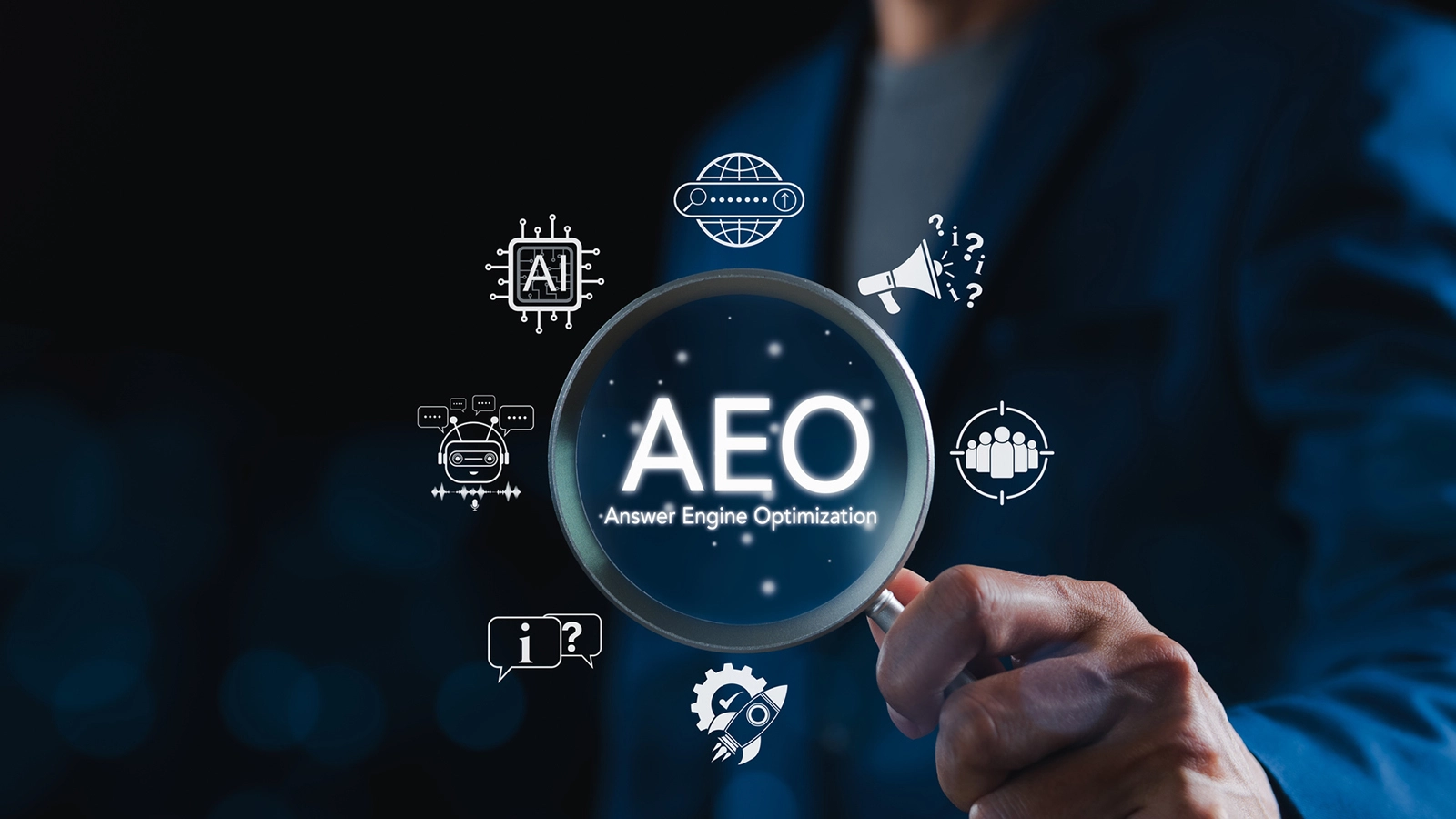
What is AEO? That was the question we asked when the acronym first started circulating in marketing circles. As publicists, we’re often skeptical of new marketing acronyms. When AEO gained traction, it seemed like just another trend brands were urged to follow.
Before forming a strong opinion, we decided to test it. We started running client names through AI platforms, not just in specific searches, but in broader, category-level queries where they should have appeared given their size, reputation and industry leadership. In some cases, they showed up and were accurately described. In others, they were missing entirely, even when smaller or less established competitors were included.
That disconnect was difficult to ignore. The brands themselves had not changed. Their expertise had not changed. But their visibility within AI-generated answers had not kept pace with how information is now being interpreted and surfaced.
That was when Answer Engine Optimization (AEO) became a reputational issue rather than a theory. AEO involves structuring and positioning content so AI platforms confidently find your brand in direct answers. Unlike SEO, which aims to place your website at the top of search engine results, AEO wants to be part of the answer itself, through tools like ChatGPT, Gemini and other generative platforms.
We’re still skeptical of most new marketing acronyms. But not since SEO changed digital visibility has one proven this quickly that it deserves attention. AEO is not a trend. It reflects a structural shift in how brands are discovered and evaluated in AI-driven search.
AEO and SEO: What’s the Difference?
SEO was built for ranking. AEO is built for answering.
Traditional search engine optimization focuses on getting your website to the top of a results page on a website like Google or Bing. You can support that visibility with paid search, sponsored placements and ongoing SEO investment.
AEO changes the equation. Instead of competing for clicks, you compete to be the answer itself within AI platforms like ChatGPT, Gemini, Grok and other conversational interfaces. You cannot pay to appear in organic search results. Responses rely on relevance and credibility. Your content must earn its place.
This shift matters because discovery rules have changed. Users once typed short phrases and scanned results. Now, queries are conversational, with full, complex questions expecting detailed answers. Increasingly, users stay within the AI interface to find what they’re looking for.
Answer engines gather information from multiple sources and present a structured response. If your positioning is vague, inconsistent, or buried, it won’t appear in results. AEO requires content that is clear, direct, credible and easy for AI systems to interpret and extract.
SEO still emphasizes backlinks, authority signals and keyword targeting. AEO prioritizes clarity, context and comprehensiveness. Content must directly answer real questions. It should be well-organized, factual and structured in a way that AI systems can confidently reference. For example, if you are publishing guidance on public relations strategies, it is not enough for it to be insightful. It needs to be structured. Clear headings, defined sections and FAQ components signal to AI systems exactly what the content is about and why it is relevant.
Why Does AEO Matter?
AI is handling a growing share of information discovery. If your content is not structured to surface inside AI-generated answers, you are increasingly invisible at the moment decisions are being made.
That is the part many brands underestimate. Discovery is no longer just about being found. It is about being framed.
AEO gives brands a way to build visibility without relying exclusively on traditional rankings. When AI platforms put together recommendations, summarize industries, or compare providers, they draw on sources they consider credible and well-defined. Companies that invest in AEO are more likely to be included in those answers.
The impact is practical. An e-commerce brand does not just want to rank for a product term; it wants to be referenced when someone asks for the best option within a specific budget or use case. In this context, authority and clarity matter more than ad spend.
This principle extends beyond retail. Many brands assume recognition equals authority, but it does not. If AI cannot clearly articulate what you do and why you matter, it defaults to sources that can.
Implementing AEO demands intention. Start with question-driven research. Understand what your audience is actually asking, not just what they are searching for. Then build content that directly and thoroughly answers those questions. That may include long-form articles, comparison guides, structured FAQs, executive insights and transcripts that are easy for AI systems to interpret.
For example, when writing about marketing trends, go beyond current popularity. Define the forces behind trends, cite credible data and outline likely future shifts. Substance and context increase the chance AI will treat your content as a reliable source rather than surface-level commentary.
AEO and Entity Optimization
AEO only works if AI systems understand who you are. Large language models (LLMs) do not rely solely on keywords. They map entities. That includes companies, executives, products, industries and the relationships between them. For example, if your CEO is described in one place as a “health tech innovator,” in another as a “digital transformation leader,” and nowhere clearly tied to a specific category like employer-sponsored healthcare AI, the system struggles to confidently place your brand in a defined space. The result is not necessarily misinformation. It is omission.
If those connections are vague or inconsistently presented across your website and media footprint, AI cannot confidently surface your brand in a response.
Entity optimization is about clarity and alignment. Your company name, leadership, product categories, industry positioning and differentiators should be explicitly defined and regularly reinforced. When those elements are organized clearly, AI systems are better able to place your brand within the right conversations.
This is where AEO intersects with public relations examples in a meaningful way.
Earned media, executive commentary and thought leadership are not just amplification tools. They help define your entity in the wider information ecosystem. A well-structured press release does more than announce news. It reinforces how your brand should be described, categorized and referenced. If your positioning is inconsistent across interviews, announcements and bylined articles, AI reflects that inconsistently. If it is clear and repeated with intention, AI reinforces it.
Content freshness is a key pillar of AEO. AI prioritizes current information, so regularly updating your site with fresh insights is essential.
Technical fundamentals still matter. Mobile responsiveness, fast load times, secure domains and accessible design help AI systems interpret your content. As AI increasingly analyzes images and video alongside text, the descriptions attached to those assets matter more. Alt text, captions and transcripts help AI understand your brand as much as written copy does.
Ultimately, SEO and AEO complement each other. SEO helps content get discovered; AEO defines your brand within the answer itself. For companies with limited budgets, especially startups focused on PR, this distinction is critical. Authority, clarity and structure often outweigh paid visibility.
Brands that are clearly defined, consistently represented and structurally easy to interpret will have an advantage. Entity optimization is not just technical housekeeping; it is reputational infrastructure.
SEO Collaboration
AEO does not fit neatly into one department. Effective execution requires collaboration among content creators, SEO experts and PR teams. SEO provides the technical foundation, content teams deliver structure and clarity, and PR establishes authority.
Thoughtful media pitches and disciplined media relations are not just about securing coverage. They reinforce how your company is described, categorized and referenced across third-party sources. That external validation strengthens your brand’s position, increasing the likelihood that AI systems will confidently surface it in their answers.
Paid strategies still play a role. Google advertising drives immediate visibility and short-term traffic. AEO operates differently by building a long-term presence within AI-generated answers. These are complementary investments: one accelerates exposure, the other compounds authority.
Ultimately, AEO reflects a broader shift in how information is discovered and framed. Brands coordinating SEO, content and PR will be better positioned not by optimizing harder, but by defining themselves clearly.
Optimize AEO with UPRAISE
As AI becomes the default first step in researching, comparing and evaluating brands, the question shifts from ranking to clear understanding. Authority, structure and consistency now determine if your expertise appears in AI-generated answers.
For startups and enterprises alike, the work begins with clarity. Audit how your brand is described across your website, earned media, executive positioning and core messaging. Identify gaps, align language and define your entity intentionally.
The brands that will win in this environment are not necessarily the loudest. They are the clearest.
If you want to understand how your brand is currently represented on AI platforms and identify opportunities to strengthen that presence, our team at UPRAISE can help.